Shikoku Temple 66, Unpenji
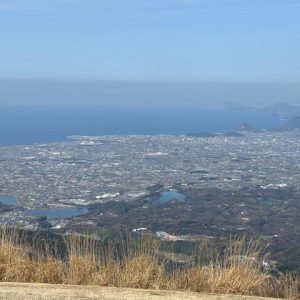
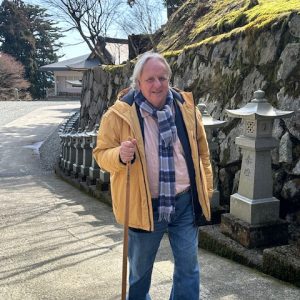
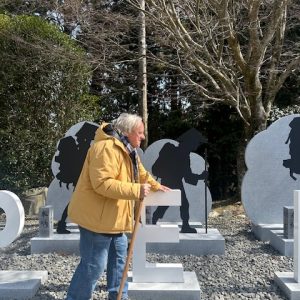
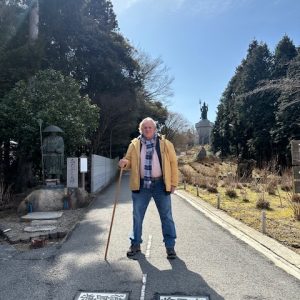
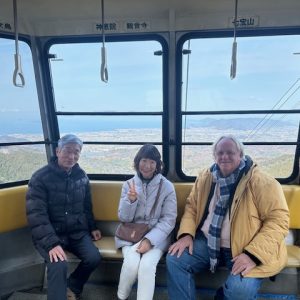
Shikoku has a few “ropeways” to help ageing pilgrims mount to the heavens. Don’t worry, they are made in Switzerland. This ropeway offers spectacular views of the landscape and the opportunity to meet with fellow pilgrims.
The Unpenji Ropeway is a Japanese aerial lift line in Kan’onji, Kagawa. It climbs to Unpen-ji, the 66th temple of Shikoku Pilgrimage. At the summit, Shikoku Cable also operates Snow Park Unpenji, a ski resort, as well as Wind Park Unpenji, a paragliding field.
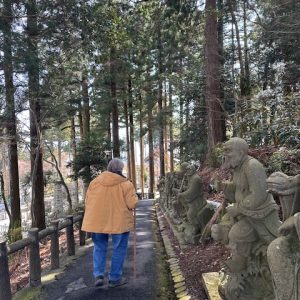
Unpenji (雲辺寺) is the 66th temple of the Shikoku Pilgrimage, located in Miyoshi, Tokushima Prefecture, at an elevation of approximately 900 meters. Known as the “temple in the clouds” and the highest in the pilgrimage (reaching over 912m), it is famous for its 500 stone Arhat statues and a “swing in the sky” viewpoint.
Unpenji Temple has the highest elevation in the Shikoku Pilgrimage. It is located near the summit of the Shikoku Mountain Range and the trail up to the temple is known as a henro korogashi, literally meaning pilgrims tumbling down. This refers to steep sections where it is easy to slip and fall.
Today a ropeway can be taken from partway up the mountain to the summit station and the temple. The address is in Tokushima Prefecture, but as a sacred site, it is the first temple in Sanuki (Kagawa) and a sekisho (checkpoint).
According to legend, Kobo Daishi visited Unpenji three times. The first time was in 789, when he was 16 years old. He came to seek building materials for temple 75, Zentsūji, but was moved by this sacred mountain and built a temple here. This was the original Unpenji. In 807, when he was 34 years old, he performed a ritual using treasures brought back from China. In 818, when he was 45 years old, he visited the temple by order of Emperor Saga (reigned 809-823).
He carved the principal image and placed some śarīra (physical remains of Shakyamuni, the Historical Buddha) and the Hiro Shada Hoin (Great Illuminator Stone) in the mountain as offerings to the seven Buddhas, and designated it as part of the Shikoku Pilgrimage.
The temple is commonly called Shikoku-bo. It became a place of study and training for monks who traveled from all over Shikoku, and prospered under the name Shikoku Koya. In the Jogan era (859-877), the temple was also an imperial temple of Emperor Seiwa (reigned 858-876). During the Kamakura period (1185-1333), seven major temple buildings were constructed, and the temple had 12 monk’s cells and eight branch temples within its precincts.