Lakemba, Sydney
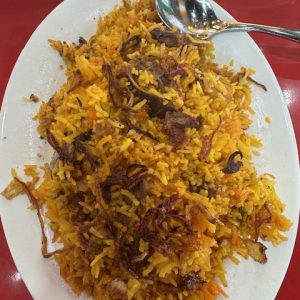
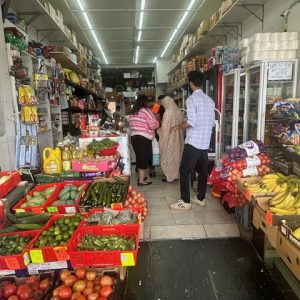
With anti-migrant sentiment and Islamophobia on the rise, I recently went to Lakemba, home to Sydney’s Bangladeshi community, for lunch to test the waters. Lakemba is a suburb of Sydney, located 12 kilometres south west of the Sydney CBD.
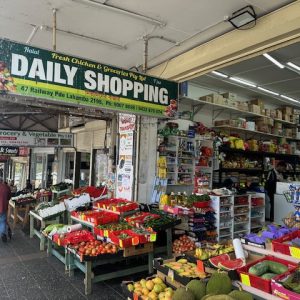
Upon arrival, I wandered around the streets of Lakemba. The atmosphere was relaxed and friendly. But there were very few hints of Anglo-Celtic Australia.
Having already visited Bangladesh on two occasions, I was on the lookout for a biryani restaurant, biryani being a very popular dish in Bangladesh and also among the Muslim community in the Indian subcontinent.
Biryani is an aromatic mixed-rice dish combining long-grain basmati rice with meat, seafood, or vegetables, and fragrant spices. It is believed to have Persian origins (the name derives from the Persian birinj biriyan, meaning “fried rice”) and was brought to India by the Mughals. Virtually every region or town has its own version of biryani, such as Hyderabadi Biryani, Lucknowi (Awadhi) Biryani, Kolkata Biryani, Malabar Biryani, and Sindhi Biryani.
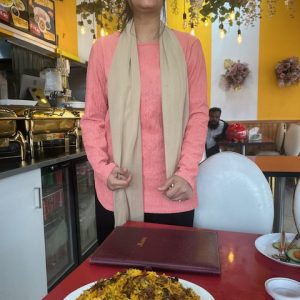
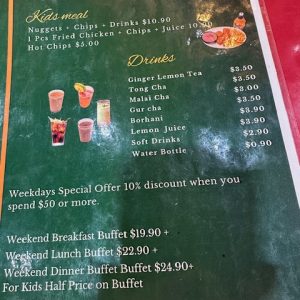
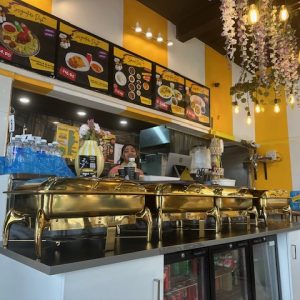
I was very warmly welcomed at “The Grameen” restaurant. My biryani was well prepared, with a nice blend of spices and ingredients. I had a nice chat with the lady running the restaurant, and a few customers. They seemed to find me a curiosity.
Lakemba has had a diverse demographic history. Its first non-Aboriginal inhabitants were British and Irish settlers. By the mid-twentieth century, the suburb had absorbed large numbers of Greek and Italian arrivals. From the mid-1970s, Lakemba became very popular with migrants from Lebanon.
But Lakemba’s population has continued to evolve such that by the 2021 census, the largest group by reported ancestry was instead Bangladeshi. In 2021, the most common reported ancestries were Bangladeshi (14.3%), Indian (10.7%), Australian (8.3%), English (6.8%) and Lebanese (6.4%).
On the language side, 16.6% of people only spoke English at home. Other languages spoken at home included Bengali (18.5%), Urdu (13.2%), Arabic (10.5%), Vietnamese (3.8%) and Rohingya (3.2%). In the 2021 census, the most common responses for religion were Islam (61.2%), Not stated (10.1%), Catholic (8.8%), No religion (6.7%) and Eastern Orthodox (3.4%).
Bangladeshi Australians are not one of Australia’s major ethnic groups. According to the Census, there were around 51,000 people born in Bangladesh living in Australia, compared with perhaps one million Australians of Indian origin. Since the liberation of Bangladesh in 1971, migration has steadily increased with the majority arriving under the Skilled Migration Program.
According to the 2021 Census, Bangladeshi Australians are highly educated. A total of 68.4% of Bangladeshi-Australians aged 15 or above had attained a bachelor’s degree or higher, higher than the national average of 26.3%.