Shikoku Temple 71, Iyadaniji
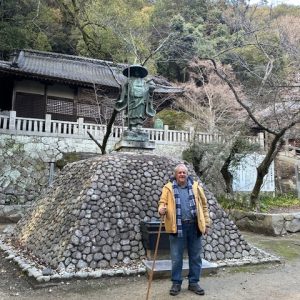
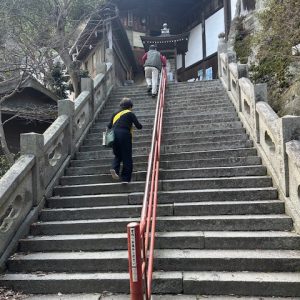
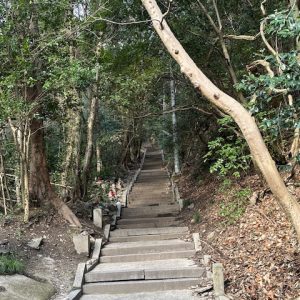
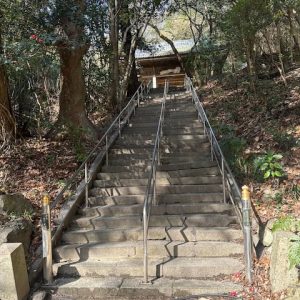
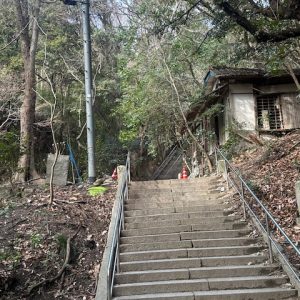
There are times when you just have to do it. And faced with 300+ steps, I just put my head down and climbed. I felt so happy at the top — although you can continue another 200 steps if you have the courage.
One of the great things about the Shikoku pilgrimage is the other pilgrims you meet along the way. Mostly people in the 60-80+ age group. There is an instant bond through the shared experience and the shared joy.
About 1,300 years ago, Gyoki built a temple on this site by order of Emperor Shomu (reigned 724 – 749), the 45th Emperor of Japan. Empress Komyo donated a copy of the Avatamsaka Sutra and built the temple for relief from illness. In addition to the Avatamsaka Sutra, there are other sutras among the temple treasures. They date back to around 724, suggesting that the temple was founded about 50 to 100 years before Kobo Daishi’s birth (774).
Mt. Iyadani, where Iyadaniji is located, has been worshipped as a sacred mountain since ancient times, and is considered one of the three most sacred places in Japan. Since ancient times, people have worshiped sacred mountains, believing that Buddhas and deities lived in then. This belief is one of the factors that led to the development of the Shikoku Pilgrimage.
The cave next to a pool of water under the Hondo is said to be the entrance to the world of the gods and Buddhas, and is an object of veneration. Numerous Buddhist figures carved by ascetics who worshipped here are scattered throughout the area. People still feel that this is a sacred area. There is a water festival where visitors offer a wooden plaque with a mantra written on it in a cave at the pool. These wooden plaques are washed and purified with the sacred water that flows down from the top of the mountain.
Legend says that Kobo Daishi studied at Shishi no Iwaya (Lion Cave) when he was between the ages of nine and twelve. The cave at the back of the main building of the temple was used as a sutra repository from the time of the temple’s construction. It is said that Kobo Daishi took sutras from this storehouse and studied day and night by the light of the window of the cave.
It is called Lion Cave because the mouth of the cave looks like the mouth of a lion roaring. It is believed that the roar of a lion is the same as the preaching of the Buddha, and that by visiting this cave with faith, the lion will eat up bad luck and protect the visitor.