Philippine eagle
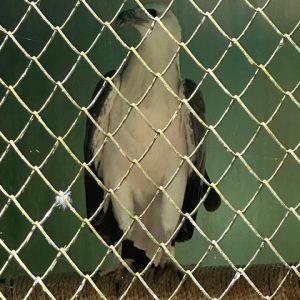
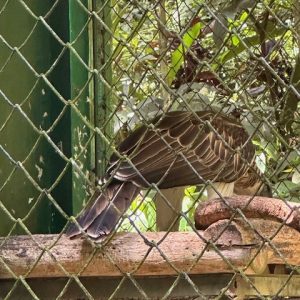
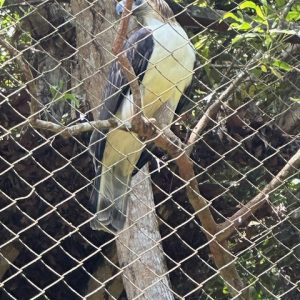
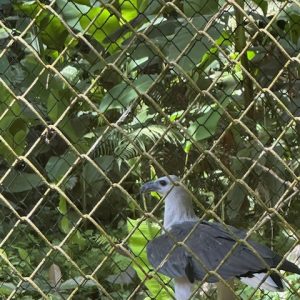
My “bosom-buddy”, Ken Shepherd, introduced me to the Philippine eagle. Ken regularly frequents the Drouot auction house in Paris, where he bought a wonderful drawing of the Philippine eagle, which he very kindly offered to June.
So I was very pleased to visit the Philippine Eagle Foundation on a recent visit to Davao in southern Mindanao.
The Philippine eagle is also known as the monkey-eating eagle or great Philippine eagle. Sadly, it is a critically endangered species of eagle of the family Accipitridae which is endemic to forests in the Philippines.
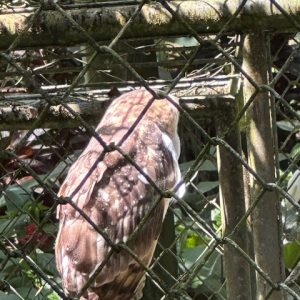
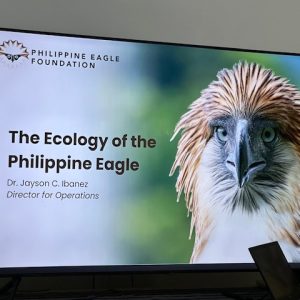
As you will see in my photos, the Philippine eagle has brown and white-colored plumage, a shaggy crest, and generally measures 86 to 102 cm (2.82 to 3.35 ft) in length and weighs 4.04 to 8.0 kg (8.9 to 17.6 lb).
It is considered the largest of the extant eagles in the world in terms of length and wing surface area, with only Steller’s sea eagle and the Harpy eagle being larger in terms of weight and bulk.
As June can proudly remind you, the Philippine eagle has been declared the national bird of the Philippines. It is also depicted in the Philippine one thousand-peso note.
But sadly, the species has been classified by the IUCN Red List as critically endangered with a declining population and is one of the most endangered raptors in the world. The most significant threat to the species is loss of habitat, a result of high levels of deforestation throughout most of its range. Since 2019, more than 20 eagles have been rescued mostly due to injuries from gunshot wounds.
The Philippine Eagle Center in Barangay Malagos, Davao City, is most certainly worth a visit. It is situated in the midst of a tropical jungle. The visitors centre offers presentations of the history, life and current challenges of the eagle.
Moreover, it is a sanctuary dedicated to the conservation and protection of the Philippine Eagle. Home to over 30 eagles, 18 of which were bred in captivity, the center plays a crucial role in preserving this critically endangered species.
Some of the challenges facing the Philippine eagle are arrogant, rogue hunters who kill the eagle. The habitat of the eagle are lands occupied by indigenous people who typically live in poverty. Moreover Philippine government authorities provide insufficient resources to help the struggle for the survival of the eagle.
On the occasion of our visit, I learnt that the Australian government is an important benefactor for the Philippine Eagle Center. Inspired by the importance of saving the eagle, I also became a benefactor.